Can Artificial Intelligence Replace Human Jobs?
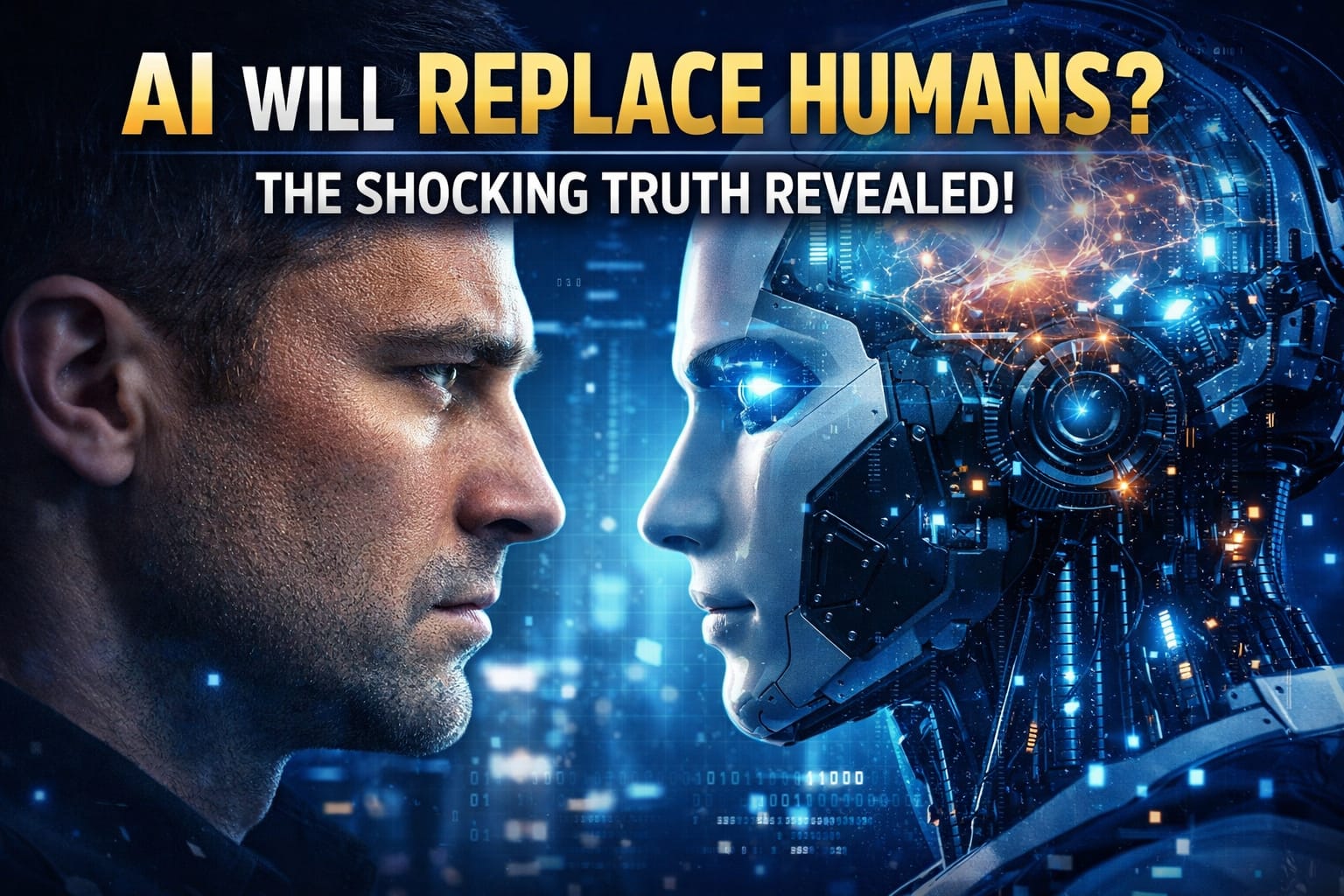
Artificial Intelligence (AI) has become one of the most talked-about technologies in the world. From smart assistants and chatbots to self-driving cars and automated factories, AI is changing how businesses operate and how people work. Because of this rapid growth, one important question is being searched globally: Can Artificial Intelligence replace human jobs?
The idea of machines taking over human work creates both excitement and fear. Some people see AI as a powerful tool that increases productivity, while others worry about job losses. The truth lies somewhere in between.
How Artificial Intelligence Is Changing Jobs
Artificial Intelligence is especially strong in tasks that are repetitive, time-consuming, and based on data. Machines can analyze thousands of records in seconds, follow fixed rules without mistakes, and work continuously without breaks. Because of this, AI is already replacing or reducing human involvement in areas such as data entry, basic customer support, manufacturing assembly lines, and routine administrative work.
Many companies are adopting AI to reduce costs and improve efficiency. Chatbots now handle customer queries, AI software manages inventories, and automated systems perform quality checks in factories. These changes reduce the need for human labor in certain roles, especially low-skill and repetitive jobs.
Jobs That Are Most at Risk
Jobs that involve predictable tasks are the most vulnerable to automation. Positions like telemarketers, cashiers, data entry operators, and basic accounting clerks face higher risk. AI-powered tools can perform these tasks faster and with fewer errors, making them attractive to businesses.
However, replacement does not always mean job loss. In many cases, AI reduces workload and changes job roles instead of completely eliminating them.
Jobs AI Cannot Fully Replace
Despite its power, AI has clear limitations. It cannot truly understand emotions, values, ethics, or complex human relationships. Jobs that require creativity, empathy, leadership, and critical thinking remain strongly human-driven.
Professions such as teachers, doctors, nurses, therapists, writers, designers, managers, and social workers cannot be fully replaced by machines. For example, AI can help doctors analyze medical reports, but it cannot replace human judgment, experience, and emotional care. Similarly, teachers do much more than deliver information; they guide, motivate, and understand students in ways machines cannot.
New Jobs Created by Artificial Intelligence
While AI replaces some jobs, it also creates many new opportunities. Careers such as AI engineers, machine learning specialists, data analysts, AI trainers, prompt engineers, and AI ethics experts are growing rapidly. Businesses now need professionals who can manage, monitor, and improve AI systems.
Traditional jobs are also evolving. Marketers use AI for analytics, writers use AI for research and editing, and entrepreneurs rely on AI for business insights. This shift proves that AI is not only a job destroyer but also a job creator.
The Importance of Skill Development
The biggest risk in the AI era is not artificial intelligence itself, but the lack of skills. Workers who do not adapt to new technologies may struggle, while those who learn how to work with AI will thrive.
Skills such as digital literacy, problem-solving, creativity, communication, and understanding AI tools will be highly valuable. Lifelong learning and adaptability are becoming essential for career growth.
The Future of Human Jobs
Artificial Intelligence will continue to transform the global job market. Some roles will disappear, many will change, and new ones will emerge. Instead of replacing humans completely, AI will act as a powerful assistant that enhances human abilities.
Humans and AI working together can achieve better results than either alone. The future belongs to people who are willing to learn, upgrade their skills, and use AI as a tool rather than fear it.
So, can Artificial Intelligence replace human jobs? Partially, yes—but not entirely. AI will replace certain tasks and roles, but it cannot replace human creativity, emotions, and decision-making. The key to success in the AI-driven world is adaptation. Those who embrace change and learn new skills will find more opportunities, not fewer.
FAQ 1: Can artificial intelligence replace all human jobs?
Answer:
No, artificial intelligence cannot replace all human jobs. It can automate repetitive tasks, but jobs requiring creativity, emotions, leadership, and critical thinking still need humans.
❓ FAQ 2: Which jobs are most at risk because of AI?
Answer:
Jobs involving routine and repetitive work, such as data entry, basic customer support, telemarketing, and simple manufacturing tasks, are most at risk from AI automation.
❓ FAQ 3: Which jobs are safe from artificial intelligence?
Answer:
Jobs in healthcare, education, creative fields, management, and psychology are safer because they require human empathy, complex decisions, and personal interaction.
❓ FAQ 4: How can humans stay relevant in the AI era?
Answer:
Humans can stay relevant by learning new skills, understanding AI tools, improving creativity, problem-solving, and adapting to technology changes.